Why this study
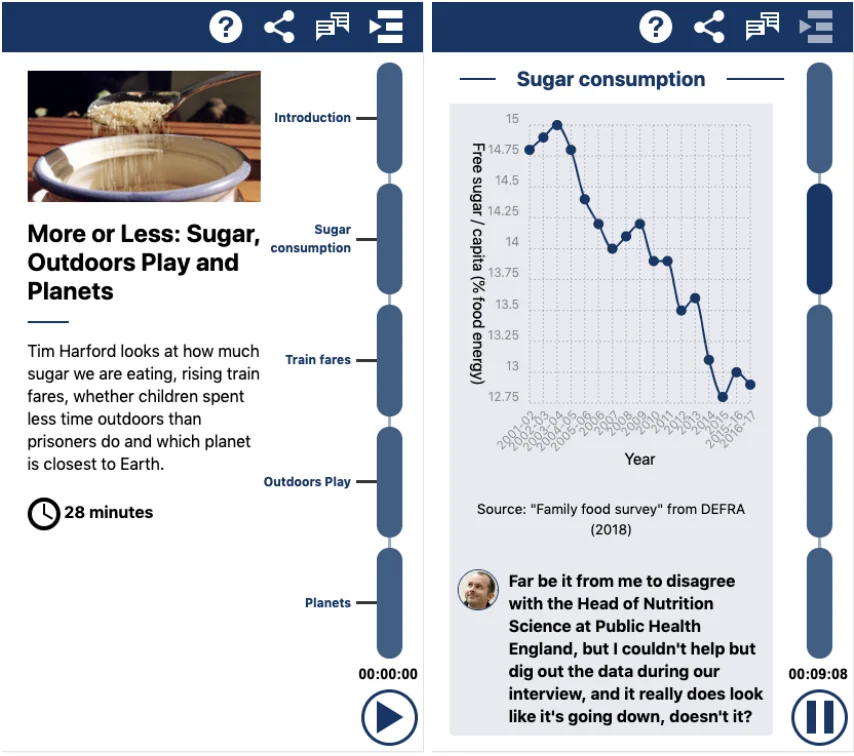
BBC R&D was prototyping an "enhanced" podcast player that added images, transcripts, chapters and contributor links on top of the audio. Before investing further, the team needed to understand whether these additions changed the listening experience in real, everyday conditions, not just in a lab.
Study design
I designed a remote field study so participants used the prototype where podcast listening actually happens. Each participant listened to one clip in each environment over a week, completing a short survey after each session, then joined a semi-structured video interview about their preferred environment, which features they used, and whether they'd switch from their usual app.
Starting with five minutes of unguided exploration captured genuine first reactions before any training. The training step that followed meant later feedback reflected informed use rather than features people simply hadn't found.
Key findings
12 of 13 recruited participants completed the full study.
Home ranked highest, but out of habit rather than focus. It was simply people's default listening moment, and several only glanced at the visuals when something caught their interest.
Travel produced the deepest engagement. Commuters gave the podcast their full attention because nothing else competed for it, and transcripts helped them follow along in noisy places.
Work and study were the weakest fit. Unlike general market research on podcasts, these participants felt their attention was already committed and mostly disliked interacting with the features while working.
Some people treated it like a webpage. A few read the transcript before pressing play, and some found the transcript, images and chapters overwhelming at first. The interface implied a different mental model from the one listeners brought with them.
75% preferred the enhanced player, but most wanted the enhancements to be optional.
Outcome
The main recommendation was to make the visual layer opt-in: audio-only when attention is elsewhere, with enhanced features available when listeners have room for them. This shaped the department's thinking on future iterations, and the findings were published as BBC R&D White Paper 389, which I co-authored.